Our mission is to help address the high cost and inaccessibility of data that early-stage fintech entrepreneurs need to build new products. These products often wouldn’t and couldn’t be built but for access to this data. We are grateful to our 40+ Data Partners who have been so helpful and generous, enabling us to support more than 450 fintech startups and counting.
We’d like to expand our data offerings to support our Data Access Residency founders. Here are four additional types of data we think will be useful in building the next wave of fintech startups. (This post is second in a series. The first is here.)
High Quality, Granular, Digital Asset Data
Digital asset data is not yet as standardized and consistent as traditional capital markets data, and sources are fragmented. Entrepreneurs will need aggregated, trading, order book, and derivatives data from both blockchains and exchanges to inform analytics and insights, regulatory compliance, risk mitigation, and more.
Embedded Finance Datasets
We’d like to be able to offer data generated from payments, savings or lending by individuals or businesses using non-traditional financial technology platforms for their banking needs. These fintech platforms partner with FDIC-insured banks but are not banks themselves.
Synthetic Data from Digital Twins
We’re observing the development of digital twins for everything from smart cities to power production to individuals. Synthetic data generated from digital twins mirror the statistical properties and behaviors of their real-world counterparts but can fill gaps while protecting privacy. Regtech entrepreneurs might be able to use this data to test ways of combating fraudulent activity and predicting illicit money movement.
Vertical Financial Datasets
Small business financial data segmented by industry vertical. Fintech startups targeting specific business verticals will differentiate from horizontally focused foundation models by leveraging deep domain knowledge of workflow, integrations, and more by following a path from vertical payments to industry platforms.
If your company has this data, and you would like to see how talented fintech entrepreneurs might use it, we’d like to talk to you. In fact, if you have any sort of new, unique, or different datasets, and you’re willing to help us fulfill our mission, please reach out!
If you’d like to see what six startups that have recently taken part in our Data Access Residency have accomplished using datasets provided by our partners, a recording of Demo Day12 is available here.
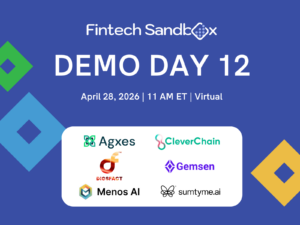
Last week, at our 12th Demo Day, we saw six fintech founders succinctly showcase their solutions to the most pressing challenges in financial services. Their companies built these solutions during their recent participation in our Data Access Residency with the support of several of our Data Partners.
The presentations were fast paced, and some of you may have missed the interactions between founders and members of the audience. So, here are a few of the questions audience members asked after seeing what these teams have built, and the answers these founders provided.
Agxes
Victoria Tostado Bringas is Co-founder and CEO of Cambridge-based Agxes. Agxes is bringing artificial intelligence to agricultural lending, using it to help bridge the gap between bankers and farmers by tackling the inefficiencies and system challenges in agricultural lending today. While taking part in the Data Access Residency, they worked with Equifax, using their Sandbox to explore their credit data and integrating credit reports into the lending workflow, evaluating behavior for ag loan repayment models.
Q. Victoria, what should we know about the Farmer Wallet?
A. The Farmer Wallet turns lending into continuous financial intelligence. It gives lenders real-time visibility into how funds are used, helping monitor risk, detect red flags, and design better financial products. For farmers, it provides live visibility into cash flow and expenses while automatically organizing records for accounting and future credit access. It increases transparency, efficiency, and value for both sides.
Q. Are non-banking financial institutions also important agricultural lenders?
A. Yes! Actually, it is a considerable segment that we serve, too.
CleverChain
Daniele Azzaro, Co-founder and CEO of London-based fintech CleverChain. CleverChain is a next-generation regtech platform that transforms compliance with AI-driven, real-time, global due diligence and automated risk intelligence. It empowers financial institutions to onboard faster, stay fully compliant, and eliminate manual work with unparalleled speed, accuracy, and scale.
CleverChain was able to accelerate product development by working with high-quality datasets from Equifax while participating in the Data Access Residency. This allowed them to test, validate, and refine their AI models across global corporate, ownership, and risk data.
VERA is an AI-powered Due Diligence Specialist designed by CleverChain to transform how compliance teams operate –– delivering end-to-end compliance reviews in minutes.
Q. Daniele, is VERA running in the cloud, on premises, or do you give clients a choice?
A. Our default solution is in the cloud, but it can be integrated to any internal systems via API. For any questions or to try it feel free to reach out at daniele.azzaro@cleverchain.ai!
Q. When VERA automatically discards a match as irrelevant, does the audit trail capture the reasoning for the discard, or just the outcome?
A. Yes, and it’s able to do this with greater context and confidence than historical legacy systems as it doesn’t rely anymore on the limited fields that can be contained in a database. We have successfully tested this approach with regulators and very large global banks who have compared results against all the main tools in the market.
Q. Are you talking to prospects in North America as well as in Europe?
A. We are on-boarding our first customer in the US. Europe is our main market but we have some customers in Asia. We are currently looking for partners to scale the US market.
DigsFact
Nishant Tomar is Chairman and CEO of Chicago-based regtech startup DigsFact. DigsFact’s Agentic AI-based fraud engine uses human-like reasoning at machine speed to prevent financial crime like fraud and money laundering in any transaction, in less than 1 millisecond. Transactions can be traditional, like check, ACH, wire and cards (credit, debit) or modern like RTP, A2A, Wallet to Wallet, etc. They can be domestic or cross-border or use digital currencies. DigsFact also worked with Equifax while taking part in the Data Access Residency.
Their proprietary product — the PreCogs — was created to augment existing fraud and money laundering solutions to reduce financial crime and lower the cost of manual reviews.
Q. Nishant — How long does it take your average client to implement your solution?
A. The short answer is it depends on the use case — if the implementation is for ACH, wire, instant payments / RTPs, etc., the fastest implementation we have done was in one month but that required commitment from our customer as well. I am happy to connect and learn more to give a more specific answer for your use case. Please feel free to email me at nishant@digsfact.com.
Q. Have you started any work on voice analysis and voice agent fraud prevention?
A. In 2026, we started working with one financial institution on detecting fraud in back-office channels such as calls, forms, etc. The fraudsters are getting extremely good at cloning voice and that’s where our approach to detecting intent drift, behavior anomalies, etc., can be effective to catch even the best voice cloning fraudster even after the voice matches.
I am happy to share more about what we are doing there.
Q. Are the PreCogs able to identify and prevent synthetic identity fraud?
A. Yes. Using a variety of techniques like behavior inconsistency, intent drift, network and relationship intelligence, GAN-based learning, etc., we can detect synthetic identity fraud. Happy to discuss this in more detail.
Gemsen
Charlie Ko is Co-founder and CEO of Boston-based fintech Gemsen. Gemsen allows organizations to harness the power of machine learning without exposing sensitive data, ensuring complete compliance with data protection regulations. Whether applied within workflows such as insurtech, regtech, fraud detection, credit analytics, compliance, or investment research, Gemsen enables secure collaboration throughout the entire process.
Massive, one of our Data Partners, provided Gemsen with an extremely rich data set of market flow information spanning many years. Since data is the fuel that powers AI/ML, their clean and reliable data made testing easier for Gemsen. Billions of rows of data flowing at millisecond speed helped Gemsen prove their reliability and improve their capabilities.
Q. Charlie, what types of firms would you like to be able to test with?
A. We have ongoing tests with a variety of financial service firms. We’re always looking to add any firms that are trying to wrap their head around massive data volume and pattern detection.
Q. Is Gemsen hiring?
A. We are always opportunistic and looking for folks that are interested in advancing the technology and applications of machine learning.
Menos AI
Junchen (William) Wu is Co-Founder & CEO of California-based Menos AI. Menos AI is designed to generate, evaluate, and validate alpha ideas for institutional investors. The system transforms unstructured market content into structured trade ideas, identifies the most credible signals, and supports end-to-end testing across different market conditions. Through the Data Access Residency, Menos AI was able to work with leading data providers including FactSet and S&P Global.
Q. William, are there any asset classes Menos AI doesn’t cover?
A. We are a true multi-asset AI-powered research and portfolio management system. Today we focus on fixed-income and global macro (i.e. FX, commodity, rates, etc.).
Q. What size (AUM) asset managers are you targeting?
A. We work with a wide range of institutional investors managing from $1 billion to $1+ trillion in AUM.
Q. Do you integrate or plan to integrate other data sources aside from internal and broker research? (i.e. transcripts, filings, structured data, etc.)
A. Yes! We have already integrated filings, transcripts and structured market data. We welcome more data partners to reach out to partner with us and bring the value of data to the buyside.
sumtyme.ai
London-based sumtyme.ai, an AI research lab, has built a universal framework for navigating complex systems, from the volatility of global financial markets to the unpredictability of atmospheric patterns. Ade Jinadu, is a Co-Founder.
The lab has pioneered a form of autonomous intelligence focused on causality rather than statistical pattern recognition. Their technology solves the inherent lag of statistical AI, offering a universal understanding of change in the world’s most critical systems. High-quality time-series data from Massive was instrumental in their recent case studies and POCs, and allowed sumtyme.ai to prove the strength of their framework in live market environments.
Q. Ade, what does it mean to say that sumtyme is an AI research lab?
A. That we are focused on making new algorithmic and architectural breakthroughs to better understand complex systems like the financial markets breaking away from the current focus on neural networks & deep learning.
Q. Are there any bank use cases?
A. Yes! For banks, our initial use case is proactive risk management for your instrument/portfolio level risk.
Q. Ade, what is the business model at sumtyme.ai?
A. Our business model is to license our underlying technology via an API as a SAAS or provide the risk insights through a GUI dashboard.
* * * * *
If you’d like to talk to any of these entrepreneurs about what they are building, please reach out to us here. If you weren’t able to attend, we will post a recording of the six startup presentations, as well as insights from thought leaders representing the EY, Morningstar, and Goodwin, to our YouTube channel shortly.
At Fintech Sandbox, our mission is to help address the high cost and inaccessibility of data that early-stage fintech entrepreneurs need to build new products. These products often wouldn’t and couldn’t be built but for access to this data. We are grateful to our 40+ Data Partners who have been so helpful and generous, enabling us to support more than 450 fintech startups and counting.
We are privileged to work with these entrepreneurs when their companies are in their earliest stages, looking out over the horizon at emerging technologies, new approaches, and new markets.
We’re working hard to expand our data offerings to support our Data Access Residency founders. Here are four different types of data we think will be useful in building the next wave of fintech startups.
Private Company Credit Data
Detailed private company data is notoriously hard to come by. In-depth data on private company loan performance? Harder still.
Today’s headlines prove that even the most sophisticated investors need better data and risk models when extending loans to private companies – and when monitoring the performance of those loans over time. It’s a challenge that fintech entrepreneurs are more than willing to take up if more of the underlying data to make such credit decisions is accessible.
Alternative Data
What alternative data will entrepreneurs be looking for? What have you got?
In the ten-plus years since Fintech Sandbox was founded, the types of datasets entrepreneurs have been able to utilize have grown tremendously. They now routinely ingest unstructured data to produce trading signals and utilize satellite imagery to more accurately underwrite the perils caused by climate change. AI is also driving the demand for new and different types of data for use in training LLMs and other models.
We know that fintech entrepreneurs will continue to make creative use of new types of data, data that isn’t used in standard financial reporting or insurance underwriting today. We’re open to hearing from our community on this one!
Tokenized Securities Data
Tokenization of stocks, bonds, money funds, bank deposits, and anything else you think you might want to trade on-chain, will lead to a Cambrian explosion of new data – from reference data to tick data and beyond.
Trading these tokenized securities is going to produce a tremendous amount of new data. Tokenized stocks may not always trade at the same price or at the same time as traditional stocks, creating two or more sets of tick data. You could even have multiple tokenized versions of each stock with different rights or liquidity profiles, exponentially expanding the volume of tick data alone.
Economic, Health, and Climate Data
When data that was once reliably available and trustworthy disappears or is no longer being collected in a timely manner, where do entrepreneurs turn to replace it?
Fintech entrepreneurs need new sources for this critical information.
If your company has this data, and you would like to see how talented fintech entrepreneurs might use it, we’d like to talk to you. In fact, if you have any sort of new, unique, or different datasets, and you’re willing to help us fulfill our mission, please reach out!
If you’d like to see what six startups that have recently taken part in our Data Access Residency have accomplished using datasets provided by our partners, please register for Demo Day 12, taking place on April 28 and starting at 11:00 a.m. EDT. It’s free and virtual.
This year, Fintech Sandbox Demo Day will take place on Tuesday, April 28. The presentations will be virtual and the event, as always, is free. Demo Days are exciting because we get to showcase startups that are on the very cutting edge of innovation and you get to see what they’re up to before they’re discovered.
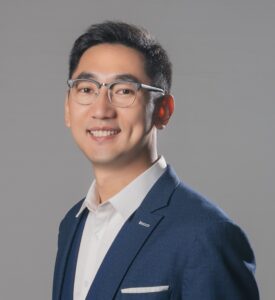
Over the last few weeks, we’ve been highlighting this year’s presenting entrepreneurs. Today, we’re talking to Junchen (William) Wu, Co-Founder & CEO of California-based Menos AI.
Menos AI is building a central intelligence system for asset management, combining the capabilities of a financial information terminal with the judgment of a senior analyst. It is designed to generate, evaluate, and validate alpha ideas for institutional investors. The system transforms unstructured market content into structured trade ideas, identifies the most credible signals, and supports end-to-end testing across different market conditions.
Junchen (William) Wu
William, tell us a bit about Menos AI. What problems are you solving? What makes your approach different?
Menos AI is building the AI-native central intelligence system for asset management.
Today, a portfolio manager typically has six screens in front of them — Bloomberg, OMS, portfolio systems, risk tools, research feeds. All showing different pieces of information, but not connected. Even with AI tools, they still have to jump between systems and stitch things together themselves.
We solve this by bringing everything into one AI-native layer. Our system connects across all these tools, understands the full context, and gives you a clear, unified view.
What makes us different is simple: we’re not another screen. We replace the need for all those screens by turning fragmented data into one source of intelligence.
What is your company’s origin story?
The idea for Menos AI was derived from my experience as Head of Quant at Northern Trust’s Front Office Solutions. My role was to help hedge funds and large asset managers manage their data, including investment book of records, risk, accounting, portfolio analytics, and compliance, etc. What I saw consistently was fragmentation everywhere: different systems, siloed data, and no unified view.
We started addressing this by building what we called a “Total Portfolio View”, bringing everything into one place so investment teams could finally see the full picture.
Menos AI is the next step of that idea with the power of AI. Instead of just aggregating data, we’re turning it into intelligence by using AI to not only unify information, but also understand it and help drive better decisions.
Who is your target market?
Our target market is institutional investors: hedge funds, asset managers, pension funds, and family offices. These are highly regulated organizations dealing with large amounts of data, complex workflows, and high-stakes decisions. They don’t just need AI tools. They need a system that is secure, compliant, and can bring everything together to help them make better investment decisions.
What do you mean when you say the distinction between AI-enabled and AI-native is existential for asset managers?
AI-enabled means you’re adding AI on top of existing workflows, like summarizing reports or helping with notes. It makes things a bit faster, but the core process doesn’t change. AI-native means the workflow itself is built around AI. The system continuously reads information, connects it to the portfolio, and generates insights in real time. The difference is scale and speed.
* If you stay AI-enabled, you get incremental improvement.
* If you become AI-native, you operate in a completely different way.
In asset management, where information and timing drive returns, that gap becomes existential.
Which Fintech Sandbox Data Partners have you worked with?
Through Fintech Sandbox, we’ve worked with leading data providers like FactSet and S&P Global.
What were you able to demonstrate based on access to this data?
We were able to demonstrate that structured and reliable data is the foundation for truthful AI. With access to high-quality data from providers like FactSet and S&P Global, we showed that our platform can ingest this data, connect it with portfolio context, and turn it into actionable insights. More importantly, we can use AI to generate results that are explainable, traceable, and deterministic, which is critical for institutional use. In simple terms, this brings AI from a black box into something investment teams can actually trust and use in real decisions.
What milestones has Menos AI achieved so far?
We’ve achieved strong early milestones across product, market validation, and client adoption. First, we successfully launched our product, and it was shortlisted by Hedgeweek as “New Product of the Year,” which is strong recognition from the industry.
Second, we’ve been recommended as a top institutional-grade AI solution for asset management by major prime brokerage consulting teams, who are introducing us to their hedge fund clients.
Third, on the client side, we’re already working with multiple leading global asset managers, supporting teams that manage trillions of dollars.
Can you describe what it’s been like to be part of the Fintech Sandbox community?
Being part of the Fintech Sandbox community has been incredibly valuable for us, especially at this stage of building Menos AI.
What stands out most is access — not just to high-quality institutional datasets like FactSet and S&P Global, but to a broader ecosystem of partners who understand how financial infrastructure actually works. In our space, structured and reliable data is the foundation for building truthful, institutional-grade AI. Fintech Sandbox gave us the ability to prototype and demonstrate that our system can generate explainable, traceable, and deterministic outputs on top of that data.
Beyond the data, the community itself is very high signal. You’re surrounded by founders and teams who are tackling real problems in financial services, not just building surface-level applications. That creates a very different kind of conversation, more focused on scalability, compliance, and real-world deployment.
It’s also been a great platform for visibility. Being part of the Sandbox has helped us engage with major institutions and validate that what we’re building is not just interesting, but actually needed.
What’s next for Menos AI?
First, scaling adoption — expanding from early clients and design partners to broader enterprise deployments.
Second, deepening the product — continuing to build out the platform into a true central intelligence layer, with more advanced, explainable AI workflows that investment teams can rely on.
Third, defining the category — helping the industry move from fragmented tools to AI-native infrastructure.
Our long-term goal is simple: every investment organization will have its own AI-powered central intelligence and we want to be the platform that makes that possible.
_ _ _ _ _ _ _ _ _ _ _ _ _ _ _ _ _ _ _ _ _
To hear more about Menos AI and five additional exciting fintech startups, be sure to register for Fintech Sandbox Demo Day 12!
Part 1 of our review of the first six months of 2024 covered the 19 startups we accepted for our Data Access Residency. And we hosted our 10th Demo Day in April, one of our two signature annual events. But we were also busy on other important fronts.
New Sponsors
We are very excited that two new sponsors joined the prestigious organizations contributing to our mission. Their generous support enables us to provide free access to data, services, a collaborative community, and a support system for early-stage fintech entrepreneurs. We are thrilled to have them working with us to further innovate in fintech. They are:
Global Atlantic, a leading insurance company meeting the retirement and life insurance needs of individuals and institutions. The Global Atlantic Foundation, which showcases its commitment to serving the community, and is a core part of the company’s culture and identity, provided a generous grant.
MCS Group, a relationship-focused consulting firm based in Boston. MCS specializes in working with fintech companies to create bespoke talent/hiring solutions for their IT teams, assisting companies ranging from startups to Fortune 500.
Thus far in 2024 we have welcomed three new data partners and expanded the datasets offered by a whopping seven of our long-time partners.
Kaleidoscope provides API access to a wide range of pre-defined and searchable securities datasets that have been extracted and aggregated from registered US and Canadian filings, including public companies, investment companies, funds, investment advisors, and US insiders. Just a few years ago, Kaleidoscope was a startup in our Data Access Residency!
ApeVue is a data services provider in the Private Equity / Venture Capital space. They provide the most actionable and timely market data and analytics on private company investments, including Pricing Data, Index and Benchmark Data, and Reference Datasets.
ATTOM is a leading curator of land, property, and real estate data, and provides premium property data to power products that improve transparency, innovation, efficiency, and disruption in a data-driven economy. ATTOM multi-sources various datasets for more than 155 million U.S. residential and commercial properties covering 99 percent of the nation’s population.
Existing Data Partners Benzinga, Dow Jones, FactSet, Moody’s, Nasdaq Data Link, Plaid, and S&P also made additional datasets available to our Data Access Residents.
If your company or foundation would like to discuss sponsorship opportunities, please reach out to us here. Fintech Sandbox is a 501(c)(3) organization committed to advancing financial innovation and reducing barriers for early-stage entrepreneurs by supporting the global fintech community.
And if your organization has data, and would like an efficient way to see what innovative fintech entrepreneurs can build with it, please reach out to us here. You’ll be fueling further advances in fintech while building relationships with impactful startups and entrepreneurs.